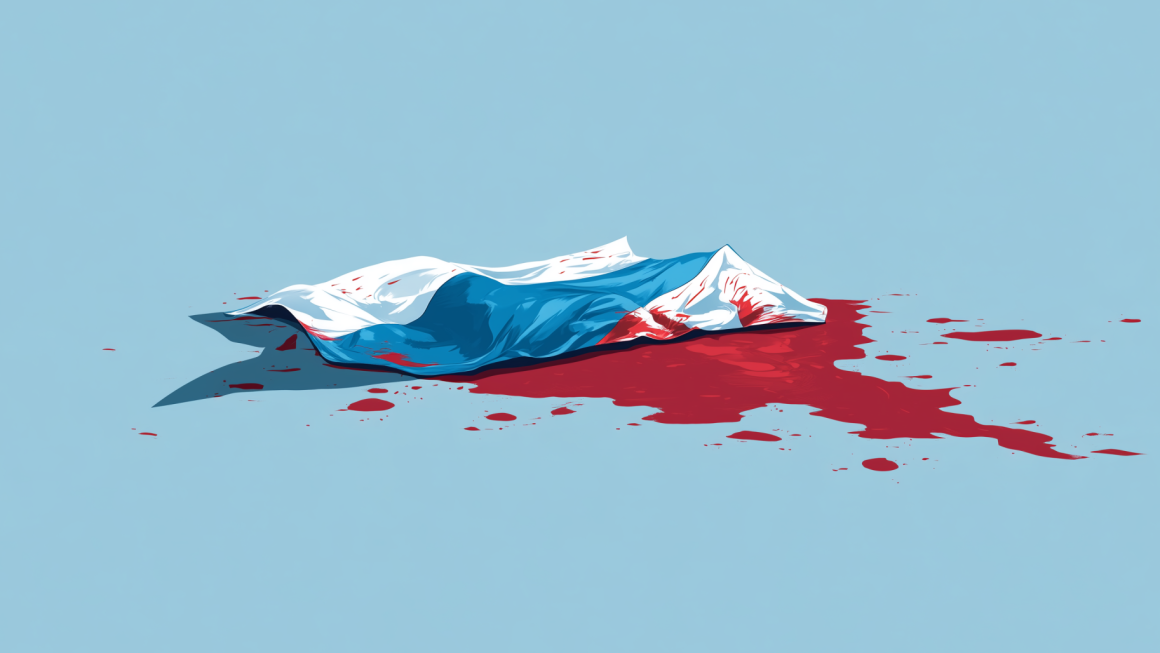
The stories we tell each other in moments of deep crisis often show who we really are… We decided to take a look at the documentary film about Russia that recently won an Oscar. How well does it reflect the reality of what is happening in the country and beyond its borders? And we can’t say we were left impressed by what we saw.
The story in the film begins at the end — the main character’s contact talks about how to properly leave the country with illegally filmed material. In the background, sad music plays, and a person is shown digging the ground. For many Belarusians, it looks very familiar — defeat in the fight against the big brother and migration. The first frames of the film create an expectation of something serious. Some kind of struggle or conflict that could lead to such consequences. But this moment never comes.
Instead, we follow the story of Pavel Talankin, a teacher and cameraman at a local school in Karabash (Chelyabinsk region) for an hour and a half. Pavel tries to resist the way liberals teach him — through small acts of defiance, playing with “oppositional” symbolism, and other tricks. In reality, there are only a few acts of resistance in the film, and they appear more like harmless pranks on camera. One of the key issues with the film is the persistent feeling that all of this is done for the public. The film itself is not just a collection of documentary clips from the school, but also specially shot moments for the project that the director wanted to include for the story. What exactly represents pure documentation and what was done for the project is often unclear, but in some moments, it becomes all too obvious. For example, the filming of the moment when Pavel decides to take down the Russian tricolor from the school.
As for the rest of the content, it’s mainly a story about the patriotic fervor that Russian society has long been falling into. For the film’s protagonist, the starting point is the beginning of the full-scale war. And this is the moment that immediately stands out: it gives the impression that life in Russia wasn’t so bad before 2022. Torture, abductions, and murders of opponents — for the majority of the Russian liberal audience, these may be seen as problems, but not serious enough to take up pitchforks and hang the secret police. The understanding that Russian society had been prepared for the war in Ukraine for many years just doesn’t seem to fit in the head of our hero. But through his example, we see the majority of the Russian opposition, who belives that 2022 as a turning point. In reality, it has long been clear that the full-scale invasion is just a continuation of the imperial policy of the Russian world, which has existed for many generations. It’s also irritating and surprising that Talankin is shocked by some marches or the youth dressing in military uniforms, considering that such things have been happening throughout the empire for a long time. And the propagandists, who receive new apartments for their successful work — is this still something that can surprise someone even in the West?
The inability of liberals or their sympathizers to see the failure of the struggle against Putin’s regime and the oligarchy within the country in the current war in Ukraine (or the previous war in Syria) creates an atmosphere in which it’s clearly difficult for Russians to find anything in common with those on whose necks the boots of the Kremlin are stepping. The hero of contemporary Russia in this film is the cameraman who watches what’s happening and tells the Western audience about the lawlessness occurring in his city. But this person today is not only a hero of Russia who loves his country but also hates Putin. Through the Oscar award, Pavel Talankin shows how useless Western liberalism is in understanding what the fight for freedom is worth. Yes, most likely, the Western viewer will better understand the suffering of a person from another empire than someone who resists. After all, for a viewer in the US, there is a certain connection with such a Pavel: Americans too sit and watch as their government destroys the lives of people across the planet. In this sense, there is much in common between Russians and Americans.
In conclusion, it is worth noting that if Russian society dreams of ever changing for the better, it should start telling stories about those who resist and do not give up. About the anarchist Ruslan Sidiki, who engaged in partisan warfare. About Daria Trepova, who blew up a military propagandist. About the dozens and hundreds of those who resist every day, not symbolically, but with direct action here and now. And if a thought arises somewhere in the back of the mind that the West won’t watch such things, then now is the time to understand that we’ve long been living outside of a movie, and all this horror cannot be stopped without political violence.

İlk günlerde alışmak zor oldu ama birkaç gün sonra doğal ses hissine alıştım.
Thanks for sharing this, very helpful. Özellikle insightful analiz hoşuma gitti.